November 21, 2026
How to Document Whiplash Symptoms During Recovery
By @saferstreetsscotland
Why Keeping a Record Matters
After a road collision, whiplash symptoms can take hours or even days to appear. The neck pain, headaches, and reduced mobility that follow are not always consistent. Some days feel worse, others better. That unpredictability makes it hard for anyone - including a medical examiner - to understand the full picture without a written record.
Documenting your symptoms carefully during the recovery period serves two purposes. It helps you track your own progress and notice patterns you might otherwise miss. It also creates a detailed timeline that can support a claim for whiplash compensation Scotland if you decide to pursue one later. The more thorough your notes, the clearer the link between the collision and your ongoing discomfort becomes.
Step 1: Start Immediately After the Incident
The first record should be made as soon as you can safely write or type. This does not have to be long. Note the date and time of the collision, how it happened, and what you felt in the moments after. Did your neck stiffen right away? Did a headache start while you were still at the scene? Write down any sensation, even if it seemed minor at the time.
Memory fades quickly, especially after a stressful event. A short entry made within an hour or two gives you a reliable baseline. If you cannot write yourself, ask someone you trust to note the details for you. Keep this initial record with the rest of your documents for later reference.
Step 2: Record Each Symptom Separately
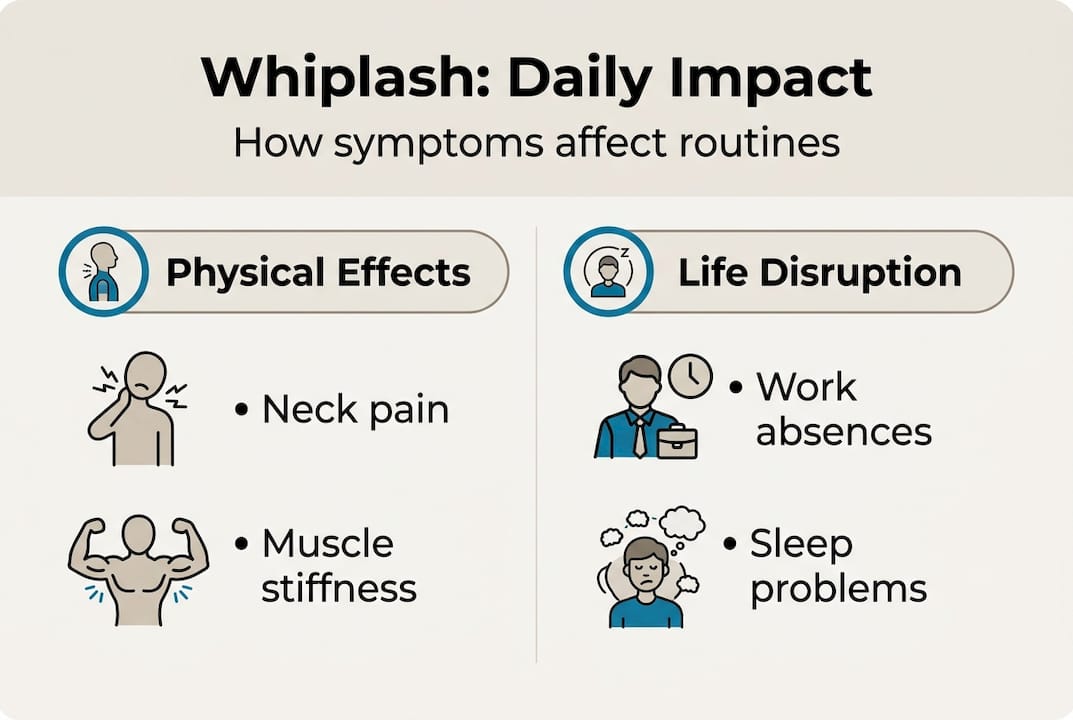
Whiplash affects people differently. Common symptoms include neck pain, stiffness, headaches (often starting at the base of the skull), shoulder or upper back pain, dizziness, fatigue, and sometimes tingling in the arms or hands. Do not group them into one vague note. List each symptom on its own line or in its own entry so you can see how each one changes over time.

For every symptom, describe:
- Where exactly you feel it (left side, right side, centre, radiating)
- What type of sensation it is (sharp, dull, throbbing, burning, tingling)
- When it started and how long it lasts
- What makes it better or worse (movement, rest, heat, cold)
This level of detail helps a doctor understand the injury better than a simple "my neck hurts." It also shows a solicitor or insurer that you have tracked your symptoms seriously from the start.
Step 3: Rate the Severity Each Day
Use a simple scale, such as 0 (no pain) to 10 (worst imaginable pain), and assign a number to each symptom every day. Do this at the same time of day if possible, because pain levels often fluctuate. Morning stiffness might be a 7, while afternoon discomfort might be a 4. Recording both gives a more honest picture than a single daily average.
Also note how the pain affects your daily activities. Can you turn your head to check traffic? Can you sleep through the night without waking from discomfort? Can you lift a shopping bag or hold a phone to your ear? These functional limits are what matter most in recovery and in a compensation assessment.
Step 4: Note Any Treatments and Their Effects
If you see a GP, physiotherapist, chiropractor, or osteopath, record the date of each visit, what was done, and what advice you were given. Did the practitioner prescribe exercises, manual therapy, or pain relief? Did those interventions help or did they cause a temporary flare-up? Write down how you felt immediately after treatment and again the next day.
Over-the-counter medications, ice packs, heat pads, or support collars should also be logged. Note the dosage or duration of use. This information shows that you have been actively managing the injury, which supports your case for whiplash compensation Scotland. It also helps your medical team adjust your care plan based on what works and what does not.
Step 5: Track Emotional and Cognitive Changes
Whiplash is not only physical. Many people experience irritability, trouble concentrating, anxiety about driving, or low mood during recovery. These symptoms matter in a compensation claim because they affect your quality of life. Write them down just as you would physical pain.
For example, note if you feel jumpy as a passenger, or if you find it hard to focus on a TV show or a conversation. If you have trouble getting to sleep because your mind replays the collision, record that too. Emotional symptoms can last longer than neck pain, and a good record ensures they are not overlooked.
Step 6: Keep a Separate Section for Medical Appointments
Every doctor visit, hospital attendance, or physiotherapy session deserves its own entry. Write the date, the name of the healthcare professional, what they said about your condition, and any tests or scans they ordered. If they gave you a prognosis - for instance, "symptoms typically resolve within six to eight weeks" - note that exactly.
Keep copies of any referral letters, prescription slips, or discharge summaries alongside your diary. These medical records form the backbone of your claim. They also help Scotland Claims Injury Lawyers understand the severity and duration of your injury if you choose to seek legal advice later.
Step 7: Photograph Visible Signs
If your neck or shoulders show bruising, swelling, or redness, take a photo with your phone. Include a date stamp if possible. Photograph any support collar or brace you wear, and take pictures of any posture changes you notice, like a tilted head or hunched shoulders. These images add a visual dimension to your written record and can be useful during a medical examination.
Store the photos in a folder labelled with the date of the collision. Back them up to cloud storage or email them to yourself so they are not lost if your phone breaks.
Step 8: Review and Summarise Weekly
Set aside ten minutes each week to read through your entries. Look for trends. Is the pain level dropping slowly? Are new symptoms appearing? Has your range of motion improved? Write a short weekly summary that pulls together the main points. This makes it easier for a doctor or solicitor to grasp your recovery trajectory without reading every single day's notes.
A weekly summary also helps you notice if you are plateauing or getting worse. If your neck pain has stayed at a 6 for three weeks despite treatment, that is important information to share with your GP. Early intervention can prevent chronic problems.
Step 9: Keep Everything Organised and Accessible
Use a notebook, a digital document, or a dedicated app - whichever you will actually use. The format matters less than consistency. If you go digital, consider a password-protected file or a private note-taking app. If you use paper, choose a bound notebook so pages cannot fall out or be lost.
Organise the record by date, with each day's entry clearly separated. Include a table of contents if the document gets long. When you eventually consult a legal professional, you will be able to hand over a complete, well-organised file that shows exactly how the injury has affected you.

For anyone considering a claim, a thorough symptom diary is one of the most convincing pieces of evidence you can provide. It demonstrates that you took your recovery seriously and that your symptoms were real and persistent. Legal professionals such as Scotland Claims Injury Lawyers rely on this kind of documentation to build a clear picture of your case, so taking the time to record everything properly is an investment in your own outcome.
Step 10: Update Your Record Until Full Recovery
Do not stop writing once the acute pain fades. Some whiplash symptoms linger for months, and flare-ups can happen after periods of normal activity. Keep recording until you have been symptom-free for at least a few weeks. That way, you have a complete record that shows both the injury and the full recovery period.
If you reach a point where symptoms return after a period of improvement, note that too. Late-onset problems are not uncommon, and having them documented strengthens the link between the original collision and the ongoing difficulty.
❧